选择语言

When sourcing a bus slip ring, provide the communication protocol, power and signal requirements, installation dimensions, rotational conditions, and operating environment. These details help engineers evaluate whether a suitable configuration can meet the requirements of your rotating equipment.
If available, provide a mechanical drawing, wiring diagram, or connector information to support the technical evaluation.
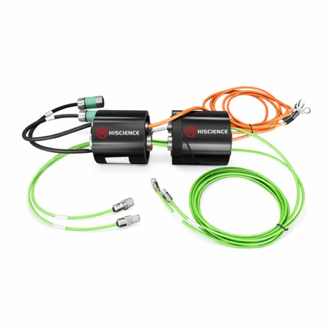
What Requirements Should Be Confirmed?
1. Communication and Data Requirements
Identify the communication protocol used by your equipment (such as PROFINET, EtherCAT, CANBus, or Profibus, which requires technical confirmation regarding protocol compatibility and transmission performance).
Also specify:
Required communication channels and data transmission rate
Other signals to be transmitted, such as encoder, sensor, or control signals
Whether power and communication signals must be transmitted simultaneously
2. Electrical Requirements
Provide the electrical requirements for each circuit group, including:
Number of power and signal circuits
Operating voltage and current for each power circuit
Types of signals to be transmitted
Any special electrical or shielding requirements
Separate power, communication, and control requirements where possible. This helps engineers assess the required circuit configuration.
3. Mechanical and Rotational Conditions
The installation structure and rotation conditions affect product selection. Please provide:
Available installation space and required dimensions
Mounting method and connector type
Cable length requirements
Rotational speed
Continuous or intermittent rotation
A mechanical drawing or installation sketch is useful when space is limited or the rotating structure is complex.
4. Operating Environment and Integration
Describe the actual operating environment, including temperature, dust, moisture, and vibration conditions.
If the equipment also requires pneumatic, hydraulic, RF, or fiber-optic transmission, specify these requirements in advance so that the integration options can be evaluated.
What Information Should Customers Provide?
Category |
Required Information |
|
Communication
|
Protocol |
data rate | |
communication channels | |
Electrical |
Circuit count |
current | |
voltage | |
signal types | |
|
Mechanical
|
Installation dimensions |
mounting method | |
connectors | |
|
Rotation
|
Rotational speed |
continuous or intermittent operation | |
Environment |
Operating temperature |
Humidity / dust / moisture | |
Documentation |
Mechanical drawing |
wiring diagram | |
connector details | |
Special Requirements |
Pneumatic, hydraulic, RF, fiber-optic, or other integration needs |
If some parameters are not yet available, indicate which items need technical evaluation instead of estimating values.
HISCIENCE Bus Slip Ring Solutions
HISCIENCE provides industrial bus slip ring solutions for rotating equipment that requires power, signal, and communication transmission. The appropriate configuration should be evaluated according to the communication protocol, electrical requirements, mechanical structure, and operating conditions.
Learn more about the HISCIENCE Bus Slip Ring Series..
Need Help Choosing a Bus Slip Ring?
If you are not sure which configuration is suitable, provide:
communication protocol+ circuit requirements+ installation dimensions+ rotational conditions+ operating environment
These specifications provide the basic information needed to evaluate a suitable slip ring configuration.
To further confirm the specific solution, you may contact Hiscience technical personnel for a selection assessment.
Tel:+86-13543318795
+86-0755-23200548
Email:sales@hslipring.com
WhatsApp:+8613543318795
WeChat:13543318795
Address:3rd Floor, Building 1, Hengchangrong High-tech Industrial Park, No.128 Shangnan East Road, Shajing Subdistrict, Bao'an District, Shenzhen City