选择语言

A separate slip ring (also known as a split slip ring) is favored when an equipment's mechanical structure cannot accommodate an integrated housing due to extreme space constraints or complex shaft layouts. Selecting a separate slip ring is ideal when the rotor (rotating contact ring) and stator (stationary brush block) must be mounted independently directly onto the machine's existing shaft and housing. Defining these physical installation limits helps evaluate whether a separate configuration provides the most reliable rotary transmission.
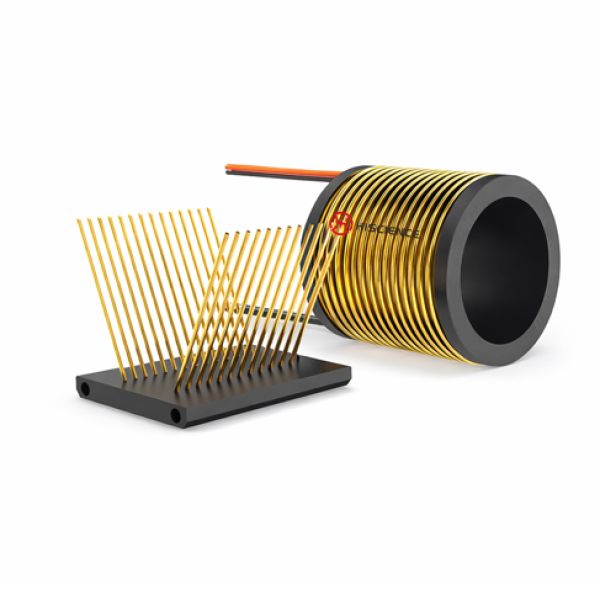
When Do You Need a Separate Slip Ring?
A separate slip ring can be considered when standard capsule or through-bore slip rings with self-contained housings cannot fit into the rotating assembly. Typical installation scenarios include:
Extremely Restricted Radial or Axial Space: The equipment has no room for an external slip ring enclosure.
Direct Shaft Integration: The rotating contact rings need to be pressed or clamped directly onto the customer's drive shaft.
Custom Stator Mounting: The stationary brush block must be customized to fit into a non-standard machine frame or gearbox housing.
High-Diameter Hollow Shafts: The central opening requirement exceeds standard through-bore product dimensions.
What Factors Affect Selection?
When evaluating a separate slip ring solution, the following parameters directly influence the engineering design:
Mechanical Dimensions and Alignment Clearance
Confirm shaft outer diameter, housing inner diameter, and axial alignment clearance. Because separate slip rings lack an integrated bearing housing, maintaining precise concentricity between the rotor and stator during installation is critical.
Electrical and Power Requirements
Confirm required circuit count, rated current per channel, operating voltage, and power transmission duty cycle. Different electrical loads require specific contact ring widths and brush materials.
Signal and Data Specifications
Specify required transmission types, such as control signals, sensor feedback, or fieldbus data. Shielding and channel spacing must be evaluated to prevent noise in unhoused configurations.
Speed and Operating Environment
Evaluate rotational speed (RPM), continuous vs. intermittent rotation, working temperature, and exposure to dust or moisture. Unhoused separate slip rings may require external machine enclosures for environmental protection.
What Information Should Customers Provide?
Category |
Required Information |
Mechanical |
Available axial height |
required outer diameter | |
mounting method | |
installation space | |
Electrical |
Current |
Voltage | |
Number of circuits | |
power requirements | |
Signal / Data |
Signal type |
Data transmission requirements | |
Motion |
Rotational speed |
Continuous or intermittent rotation | |
Environment |
Operating temperature |
Humidity / dust / moisture | |
Connection |
Connector and cable requirements |
f the application involves complex mechanical integration, providing a 2D mechanical drawing or 3D CAD model helps engineers evaluate mounting feasibility.
Hiscience Separate Slip Ring Solutions
Hiscience provides Separate Slip Ring Solutions for applications requiring independent mounting of rotor and stator components
Need Help Choosing a Separate Slip Ring?
If you are not sure which configuration is suitable, provide:
Bore diameter + number of circuits + current + voltage + signal/data requirements + rotational speed + installation space + operating environment
These specifications provide the basic information needed to evaluate a suitable slip ring configuration.
Contact Hiscience for a Separate slip ring solution tailored to your application.
Tel:+86-13543318795
+86-0755-23200548
Email:sales@hslipring.com
WhatsApp:+8613543318795
WeChat:13543318795
Address:3rd Floor, Building 1, Hengchangrong High-tech Industrial Park, No.128 Shangnan East Road, Shajing Subdistrict, Bao'an District, Shenzhen City