
选择语言

Installation Methods for Ultra-Miniature Slip Rings and Flangeless Slip Rings

c2.png

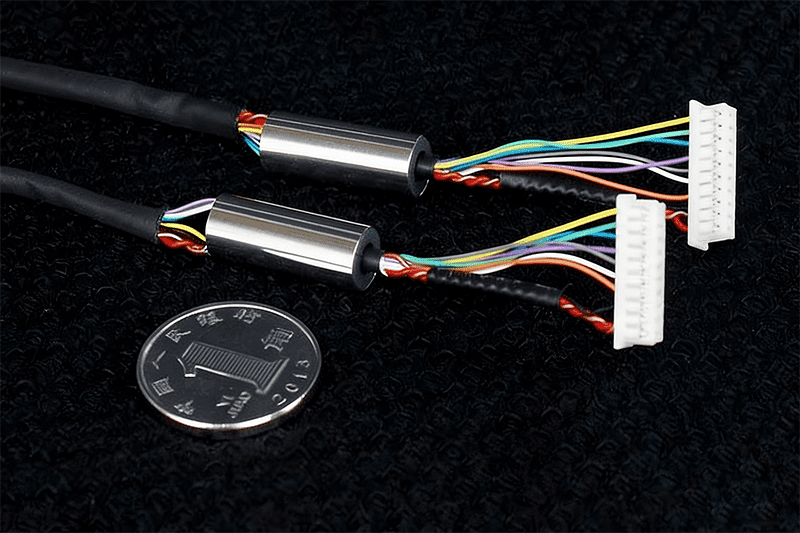
Although many miniature conductive slip rings do not visually resemble the traditional cap shape, they are essentially a type of compact capsule slip ring. They are mainly used in applications such as UAVs (drones), gimbals, security surveillance systems, robotics, testing instruments, small rotary platforms, and automation equipment. These slip rings enable 360° continuous rotation while transmitting low-current power, control signals, video signals, network signals, and other mixed signals.

Due to their extremely small outer diameter—typically ranging from 5 mm to 20 mm—miniature slip rings are often used in applications where the available installation space is very compact and limited. In addition, miniature slip rings generally have low operating torque, meaning that even without rigid mounting, their normal operation and performance will not be significantly affected.

Therefore, in order to save space, miniature slip rings are usually not mounted using a traditional capsule flange. Instead, they are commonly fixed using simpler methods such as side screws, adhesive bonding, or tape attachment, which provide convenient and space-efficient installation solutions.

5.png

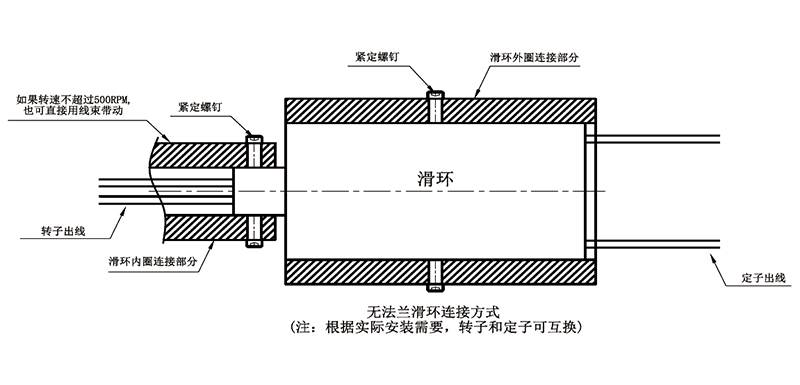
Installation Diagram of Ultra-Miniature Slip Rings and Flangeless Slip Rings

6.png

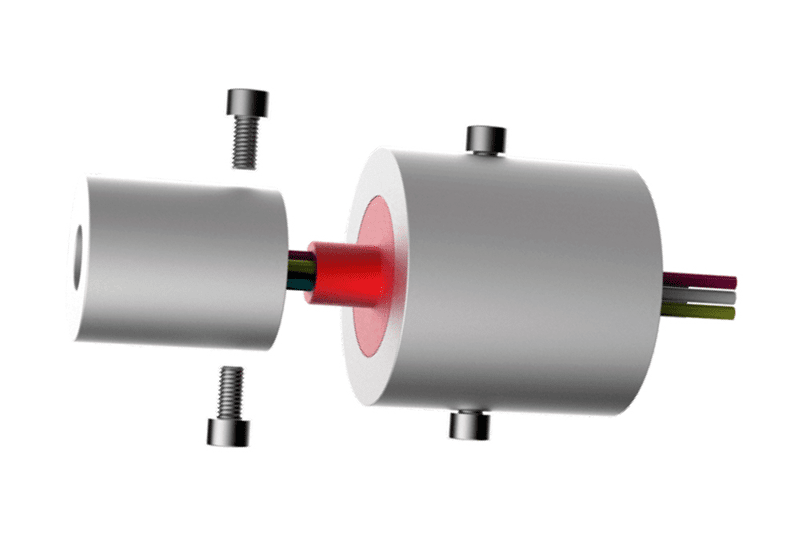
3D Installation Diagram of Ultra-Miniature Slip Rings and Flangeless Slip Rings

Installation Instructions for Ultra-Miniature Slip Rings and Flangeless Slip Rings

1. Inner Ring Fixing

  • For miniature and compact slip rings, the inner ring can be driven directly by the cable, and additional fixing is generally not required.

  • For larger stator flange slip rings, the inner ring should be secured using set screws or flat positioning surfaces.

2. Outer Ring Fixing

Place the entire slip ring assembly into the stator sleeve, and secure it at the stator end using screws to ensure stable positioning.

Installation Precautions

  1. The slip ring body should not bear any additional load other than its own weight. The lead wires from the slip ring must not be subjected to external pulling forces.

  2. During installation, the lead wires must be carefully protected to prevent damage to the insulation layer, which could affect the overall product quality.

  3. The slip ring is a precision electrical component and should operate in a dry and low-dust environment. If the working environment is harsh, additional protective measures should be implemented.

  4. Ensure that the fixing nuts or screws of the stationary parts are securely tightened and do not loosen.

  5. The stator wires should be kept away from the rotating shaft, and the rotor wires should be kept away from the stationary parts, to prevent the wires from being scratched or damaged during rotation.

0.144078s