选择语言

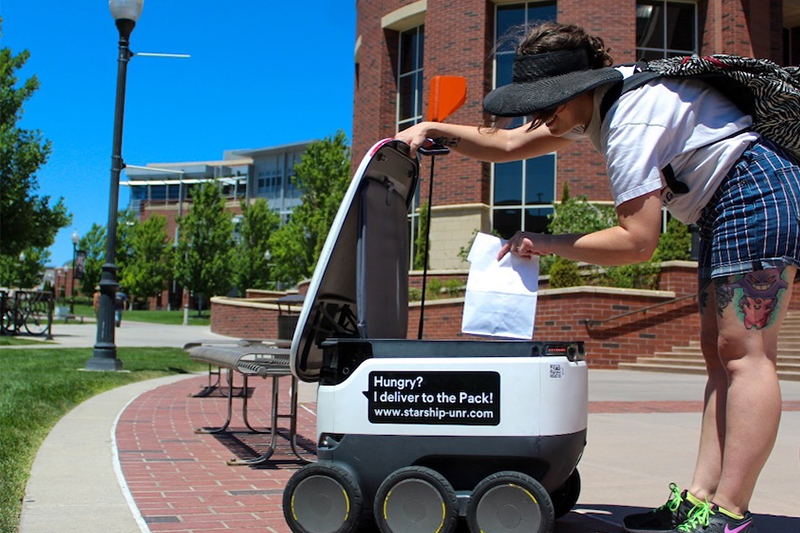
Delivery robots are increasingly used in cities, campuses, hotels, and office buildings to transport food, packages, and other goods. These autonomous robots help improve logistics efficiency and reduce the need for manual delivery in busy environments.
To navigate safely and efficiently, delivery robots rely on multiple sensors such as cameras, lidar systems, radar units, and positioning modules. Many of these sensing systems are installed on rotating platforms that scan the surrounding environment continuously. This rotation allows the robot to detect obstacles, map its surroundings, and plan safe routes.
Hiscience slip rings support the rotation of these sensing modules by enabling uninterrupted transmission of electrical power and data signals. Without slip rings, repeated rotation could cause cables to twist and eventually fail. Hiscience slip rings prevent this issue by providing a stable connection between rotating and stationary components.
Delivery robots operate in dynamic environments where reliability is essential. These robots may travel long distances and operate for many hours each day. Hiscience slip rings are designed to support continuous rotation and stable signal transmission, helping delivery robots maintain accurate navigation and dependable performance.
As autonomous delivery technologies continue to grow, robotics will play a larger role in logistics and transportation. Hiscience slip rings help support the reliable operation of these robots by enabling smooth rotation and consistent electrical transmission within their sensing and navigation systems.