选择语言

In many industrial applications, video transmission remains perfectly stable when equipment is stationary — but once rotation begins, problems suddenly appear:
• Video stuttering
• Screen flickering
• Packet loss
• Unstable latency
Most troubleshooting starts with:
cameras, switches, network cables, or encoders.
However, in many high-definition systems, the real issue lies within the slip ring itself.
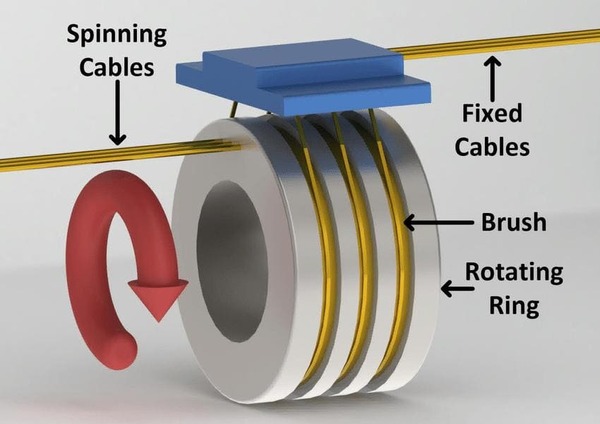
As 4K and 8K technologies become increasingly common, slip rings are no longer simple power transmission components. They are now part of the high-speed data transmission architecture.
Because slip rings rely on dynamic electrical contact, rotational movement continuously changes the contact state between brushes and rings. Excessive fluctuation in contact resistance can lead to:
• Signal reflections
• Bit errors
• Data retransmission
• Video frame drops
These issues become especially noticeable in demanding environments such as:
• Ports
• Wind power systems
• Heavy-duty PTZ platforms
Where strong electromagnetic interference, high-power motors, and continuous operation place additional stress on transmission stability.

As a result, more advanced systems are now adopting hybrid electro-optical slip ring solutions:
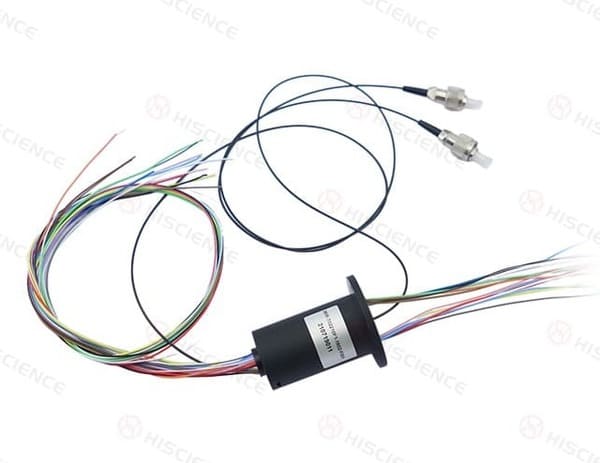
• Electrical power transmitted through traditional conductive paths
• High-speed data transmitted through fiber optics
Modern engineers are increasingly focusing on:
• Dynamic contact resistance
• Insertion loss
• EMI shielding capability
Because long-term system stability is often determined by these overlooked details.